
Search

Showing posts with label national park. Show all posts

Monday, October 8, 2007

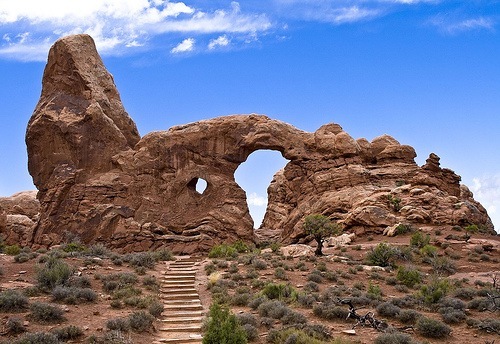
Turret Arch - Arches National Park, Utah - Tips for photos and travel

turret Arch

Turret Arch is a very well known geological structure inside the Arches National Park, Utah. Arches National Park contains the world's largest concentration of natural stone arches. Once you are here, you can plan to Hike, Bike, Do rock climbing, horse riding, ATV off-road tours etc. Perhaps even take the Guided tours .Unfortunately I reached there around noon. The flat light will make the pictures dull. If you can reach there for sunset you can really make the pictures pop. Here is a map of the location.
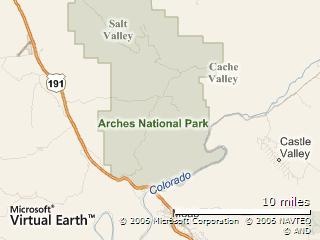
Map of Arches National Park

Tips for getting good photos here

  • The best times to visit and photograph this location is early morning or late evening. The color of the red rocks will be enhanced by the good lighting.
  • Watch for the forecast as it rained the day we went there and we lost much time.
  • Pack your lunch and snacks and get lots of water. Rest rooms and Drinking water are available only in very select locations inside the park.
  • You would need a tripod and a polarizing filter to get good shots
  • If you have a neutral density filter, that would help when the sky is real bright.
  • Try out multiple exposures for HDRs and experiment with Panos
  • Make sure that you don't obstruct other persons view when u shoot

The park has a nominal entrance fee of 10$ per vehicle which is good for 7 days. Make sure that you book your accommodation in advance as The nearby town of MOAB will get filled easily on summer weekends. The downtown has some excellent shops to buy Native Indian art and some good restaurants. Make sure that you grab a copy of the Downtown guide from your hotel. Its is also available in the shops along on the sidewalk. While you are there, please don't forget the Other major parks there like the Canyonlands National Park and Zion

I would Suggest getting one of the following books that would help you understand more about the park and the state

More Information

http://www.nps.gov/arch/

Friday, October 5, 2007

Alpine Tundra Vegetation of Rocky Mountain National Park

Rocky Mountain National Park (RMNP) has a lot vegetation and wild life to offer. However above 11,000 or 11,500 feet ASL, we are above the tree line and all the vegetation will give way to the Tundra. Thats the only kind of plant life that grows in these High Altitudes. The word Tundra itself means "Land of No Trees"

Tundra is subject to extreme weather of freezing temperature, high altitude winds, long periods of snow cover etc. During June to August the Tundra blooms and there is a wide variety of flowers.

Tundra grows at a very slow rate of less than an inch over 20 years. It would take hundreds of years for the Tundra to grow back when damaged. Visitors to the park are required to stay on established trails to avoid damage to the Tundra. However every time I have been to the park, I can see people running around, taking shortcuts, posting for photos etc inside the Tundra vegetation. When you bring children to the park, its your responsibility to educate them on the importance of the delicate environment they are in. What you see in this picture is Tundra vegetation at around 12500 feet ASL. the damage done by walking over them would take several years to heal due to the harsh environment and the slow growth rate of the plant. Damaging the Tundra could cost you a hefty Fine

I am told that there are over 330 variety of Alpine Tundra in the rockies. The best way to have an up close look is to take the Trail Ridge Road inside the RMNP. Please make sure that you educate your group regarding the importance of preserving the Tundra vegetation. Enjoy them from a safe Distance and Dont allow the children to run about on them. Summer time is a good time to visit this place if you want to see the Tundra Bloom. But the season is short and probaly somewhere around June. Please make sure to call the Park authorities and check before planning your trip.

For further reading:
http://www.nps.gov/archive/romo/visit/weather/scenicdrives.html
http://www.us-parks.com/rocky/scenic_drives.html
http://en.wikipedia.org/wiki/Tundra

Saturday, September 29, 2007

Scenic Drives of the Wild West


This picture is featured at Deviant Art http://www.deviantart.com/print/1831418/

This is one of the many scenic drives that you com across in the vast open roads of America। You may drive for miles and miles on these roads and not see a single human being for hours.


There is so much Dynamic range in this Photo. This is not an HDR. I have done is some minor Level and color saturation adjustments to get this. Propoer HDRs are impossible to do when u are moving at 70 miles an hour because you cannot get multiple exposures from the same point/camera position. It is possible to fake an HDR by using a single RAW image as input.

This was taken from a car moving at over 70 miles per hour. We were coming back from the Arches National Park, Utah.

The Road was very scenic with the Hills on the left , open Roads and beautiful cloud formations. A Hoya Multi coated Circular Polarizer was used.

What you need to remember for taking these kind of shots:

1) When you are moving, as in this case, i am moving in a car, the shutter speed should be atleast inverse of 3 times the focal length u are using. Here i am using a focal length of 54 mm and my shutter speed is 1/200 this saves me from camera shake

2) Keep the horizon straight. It may not me easy when you are moving, you can always correct it later.

3) Rule of thirds is more like a guideline and not actually a rule. If you have the time to compose the shot try to follow it. In this case i was in a car moving at over 70 miles an hour. Composing was not really an option. In these cases you can always frame the shot loose and then correct it later.

Tecnical Details:

Camera: Canon EOS Digital Rebel XTi
Exposure: 0.005 sec (1/200)
Aperture: f/11
Focal Length: 54 mm
ISO Speed: 100
Exposure Bias: 0/3 EV